

DME/O&P in Managed Care and Value-Based Care
Delegated Risk. Shared Accountability.
DME/O&P rarely gets much attention when everything is working as expected — in California's mature managed-care environment, or in any market where delegation and risk-based arrangements are in play.
It gets attention when a patient cannot find a provider. When the contracted network looks adequate on paper but cannot support the actual need. When authorization patterns vary across groups or providers. When utilization or spend starts moving without a clear explanation. When a vendor is meeting contractual requirements but the patient experience says otherwise.
And sometimes, simply when no one has a clear view of what is happening across the category.
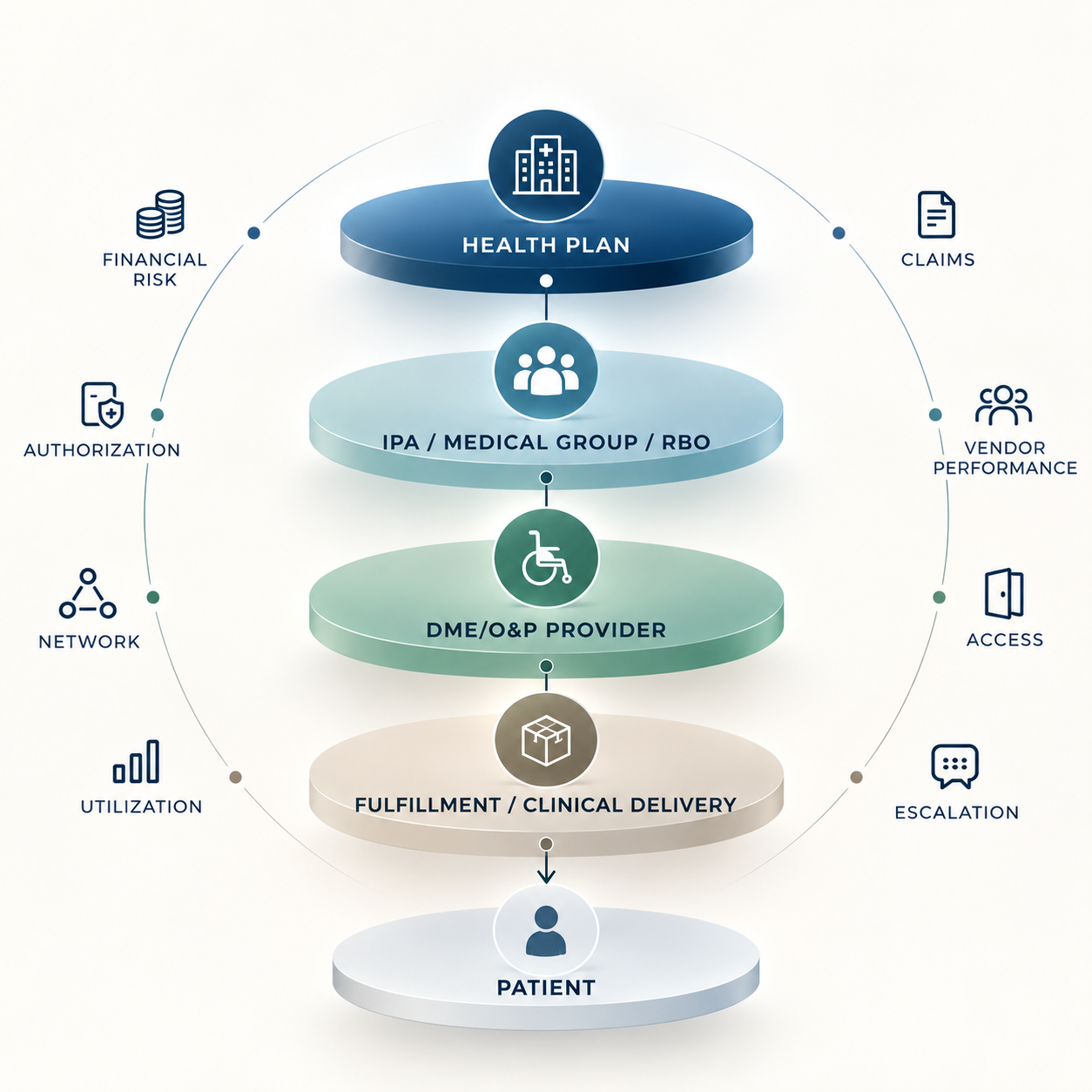
These are familiar challenges for organizations managing DME/O&P across delegated and risk-based arrangements. Utilization, spend, network access, vendor performance, authorization, service delivery, and patient experience are interconnected — even when responsibility for them sits in different places.
Better visibility. Smarter spend. Stronger performance.
ARCLYFT Health brings specialized DME/O&P expertise and decades of operator-side experience to help health plans, IPAs, medical groups, health systems, and other risk-bearing organizations better understand what is happening across the category — from what is driving spend and utilization to how networks and vendors are performing — and identify opportunities for focused improvement.

The Delegated Care Model
Capitation. Delegation. DOFRs. Risk Pools. IPAs. Medical Groups. Prior Authorization. Network Adequacy. Claims Responsibility. Encounter Data. Vendor Agreements. Shared Risk. Global Risk.
Delegation is not new to managed care — but DME/O&P tests it in a specific way. The category sits at the intersection of clinical judgment, product selection, authorization, and physical fulfillment, which means responsibility rarely stays with one organization for the full episode of care.
A health plan delegates financial and utilization responsibility to a medical group or IPA. That organization contracts with a DME/O&P provider to deliver care. The provider, in turn, depends on branches, distribution centers, subcontractors, or manufacturers to actually get equipment to the patient.
Each handoff makes sense on its own. Together, they raise a harder question: who is actually accountable for what the patient experiences?
Where Delegation Creates Blind Spots
Financial responsibility may have been delegated.
Accountability rarely ends there.
DME/O&P performance issues rarely appear as a single, obvious event. More often, they develop gradually — a contracted network that cannot fully meet demand, service commitments that are difficult to independently verify, product selection that varies across providers, or utilization data that arrives too late to identify emerging patterns.
Individually, these issues may appear operational. Collectively, they can affect access, cost, utilization, patient experience, and the performance of the broader managed-care arrangement.
And they are not limited to capitated relationships. Whether DME/O&P services are reimbursed through fee-for-service, capitation, or another contractual model, organizations still depend on their contracted vendors and downstream networks to deliver the access, service, clinical consistency, and reporting the arrangement was designed to provide.
Common Points of Failure in Delegated DME/O&P Arrangements
-
A contracted DME/O&P network is only effective if it can actually provide the services patients need. Geographic gaps, specialty-product requirements, limited clinical expertise, capacity constraints, or products a contracted vendor simply does not provide can force referrals outside the intended network.
This occurs in both fee-for-service and capitated arrangements and is particularly common with specialized DME and O&P services. When contracted vendors cannot meet the need, non-contracted providers may become necessary — increasing cost, complicating coordination, and undermining the network strategy the organization intended to maintain.
Understanding leakage therefore requires more than knowing which providers are contracted—it requires understanding where providers are located, what capabilities actually exist at those locations, and whether the network can realistically meet the needs of the covered population.
-
Turnaround times, delivery expectations, communication standards, documentation requirements, and other service-level commitments may be clearly defined in vendor agreements but difficult to independently verify in day-to-day operations.
Performance gaps can persist without becoming obvious at the plan or delegated-entity level until complaints, grievances, escalations, or access issues begin to reveal a broader pattern. By then, the issue may have affected multiple patients without appearing clearly in traditional utilization or claims reporting.
-
Product selection within DME/O&P can vary meaningfully across vendors, locations, clinicians, and delegated entities. Patients with similar clinical presentations may receive different components, materials, technology levels, or product configurations — sometimes appropriately, and sometimes because practice patterns have evolved without consistent oversight.
Claims data alone may not fully explain that variation. Similar HCPCS coding can represent materially different products, costs, clinical capabilities, and utilization decisions, making specialized review important when evaluating whether variation reflects patient need or inconsistent practice.
-
Health plans and risk-bearing organizations depend on accurate, timely data to understand utilization and performance across delegated arrangements. But when claims, encounter, authorization, or vendor-level information passes through multiple organizations before reaching the entity ultimately accountable for performance, visibility can become delayed or incomplete.
For DME/O&P, those gaps can make emerging utilization patterns, network issues, or vendor-performance concerns difficult to identify until months after they begin.
-
Replacement and resupply patterns can vary across vendors, delegated entities, and product categories. Over time, routine operational practices may begin to drive frequency as much as underlying clinical need or established coverage criteria.
Because replacement and resupply transactions may receive less scrutiny than an initial device or episode of care, small variations in timing or frequency can accumulate across a population. Identifying those patterns requires looking beyond individual claims to understand how utilization is developing over time.
DME/O&P Through a Program Integrity Lens
DME/O&P operates within a broader program integrity framework.
California DHCS identifies oversight and monitoring of Medi-Cal managed care plans and providers as a core program integrity function, alongside provider enrollment, audits and investigations, and efforts to prevent fraud, waste, and abuse. For DME/O&P, that makes downstream visibility particularly important. Supplier enrollment and accreditation, service standards, beneficiary access, complaints, product safety, billing practices, and performance management all contribute to understanding how a network is performing.
Source: DHCS, Medi-Cal Program Integrity Fact Sheet (January 2026)

Beginning January 1, 2026, CMS increased the required frequency of DMEPOS supplier resurvey and reaccreditation from once every three years to at least once every 12 months — a threefold increase in survey frequency.
Existing suppliers transition to the annual cycle as their current three-year accreditation periods expire. For organizations managing broad DME/O&P networks, that creates a much more dynamic credentialing and compliance environment than the traditional three-year cycle.
CMS also changed the requirements for new supplier locations. Beginning January 1, 2026, existing DMEPOS suppliers opening a new location must have that location surveyed before accreditation.
Source: CMS, DMEPOS Accreditation, MLN905710 (December 2025)
A Category Worth Monitoring
Federal Medicare data provides additional context for why DMEPOS warrants specialized attention.
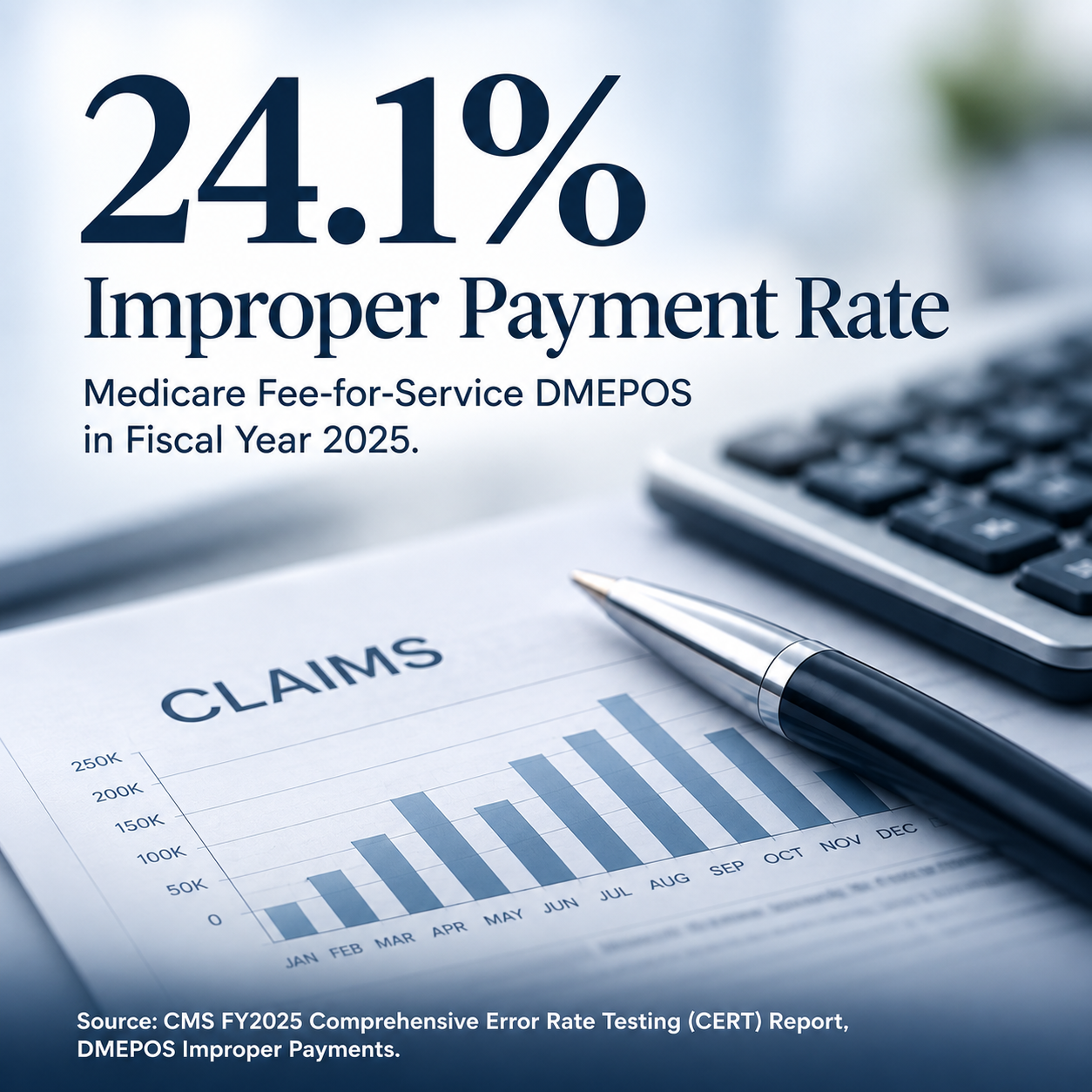
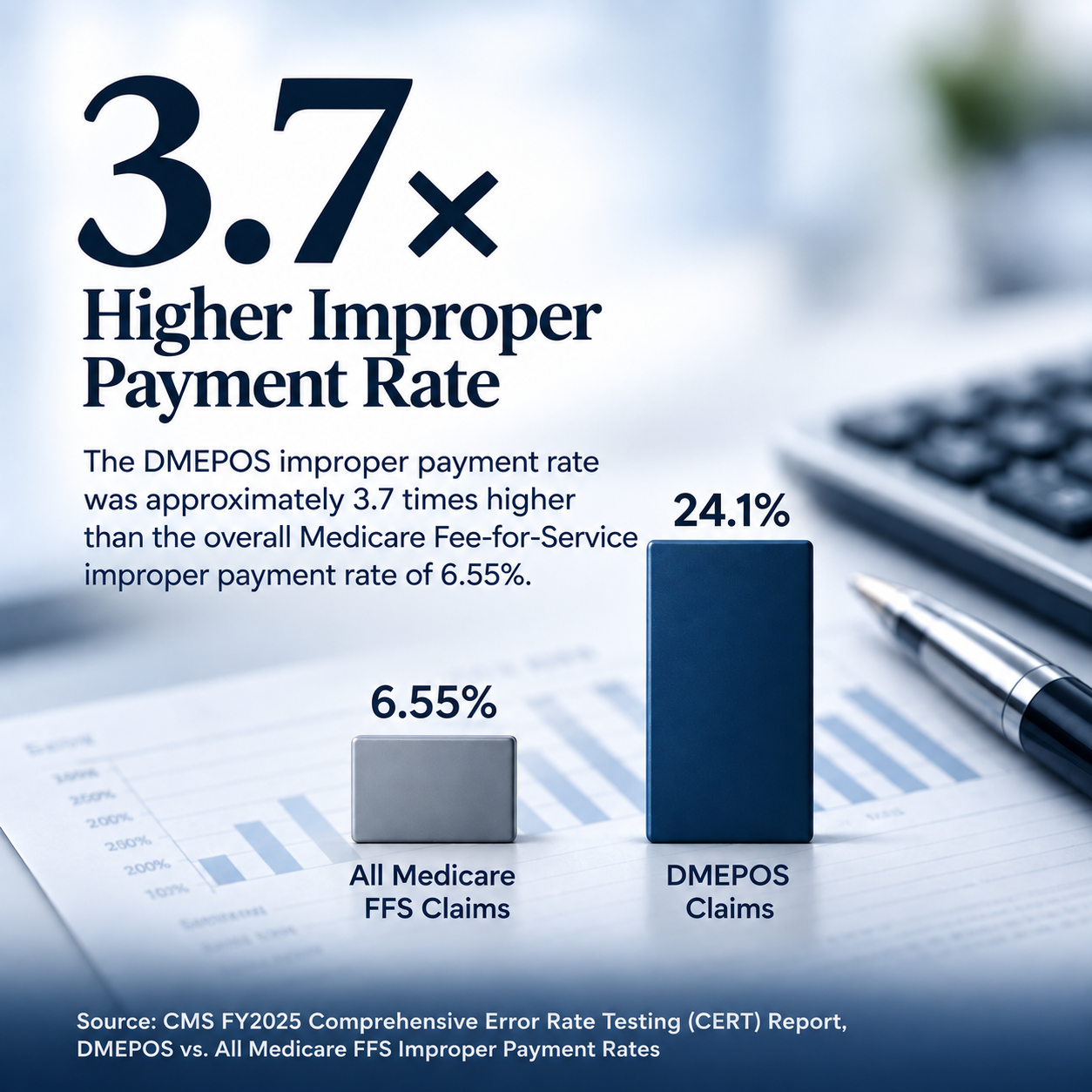
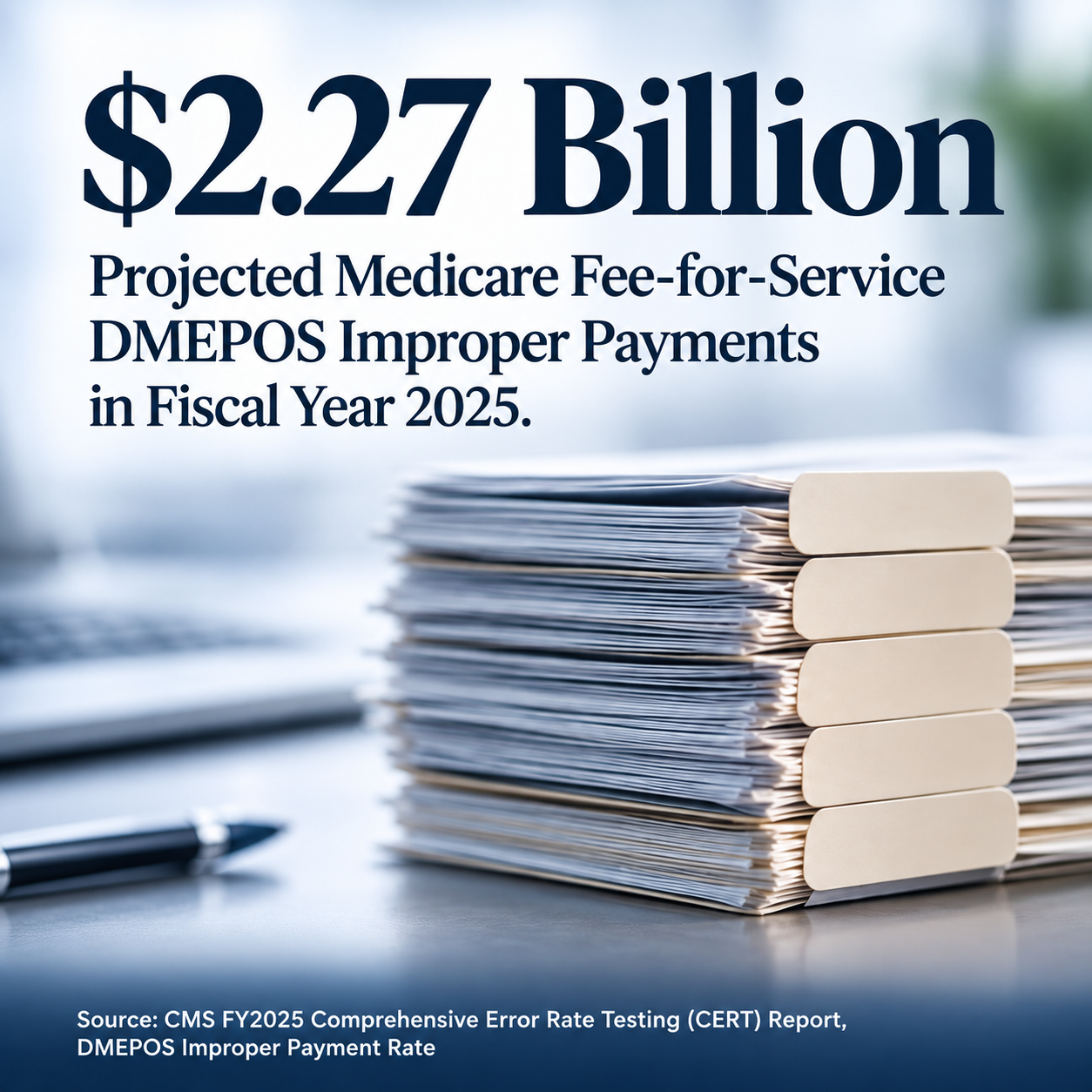
Data Identifies Where to Look. DME/O&P Expertise Helps Determine What It Means.
Improper payments can result from documentation deficiencies, coding errors, coverage requirements, medical-necessity issues, and other payment errors. Likewise, higher utilization or variation in utilization does not necessarily mean care is inappropriate. The objective is not to begin with the assumption that utilization should be reduced. It is to understand what is driving utilization and spend, identify patterns that warrant closer review, and distinguish meaningful opportunities from appropriate clinical care.
An Operator-Side Perspective
ARCLYFT Health is led by Spencer Doty, MBA, CPO — a board-certified prosthetist and orthotist with more than 20 years of clinical, operational, executive, and payer-facing experience across DME and O&P, with particularly extensive experience in California’s healthcare and DME/O&P landscape.
That operator-side perspective helps ARCLYFT understand not just what claims, utilization data, contracts, or performance reports show, but what may actually be happening inside the provider and vendor organizations generating them.
For health plans, IPAs, medical groups, and health systems, that distinction matters when determining where intervention is warranted — and where it isn't.